
Phase 01
Baseline
We run AI Visibility Check for you and your competitors, review Search Console, and list the questions buyers ask assistants in your market.
More buyers now ask ChatGPT, Gemini, Perplexity or Google's AI Overviews for recommendations instead of scrolling through results. Generative engine optimisation (GEO) is the work that helps those assistants find your business, understand what you do, trust it, and name you in their answers. We built our own AI visibility tool to measure it, so every recommendation starts from evidence.
At a Glance
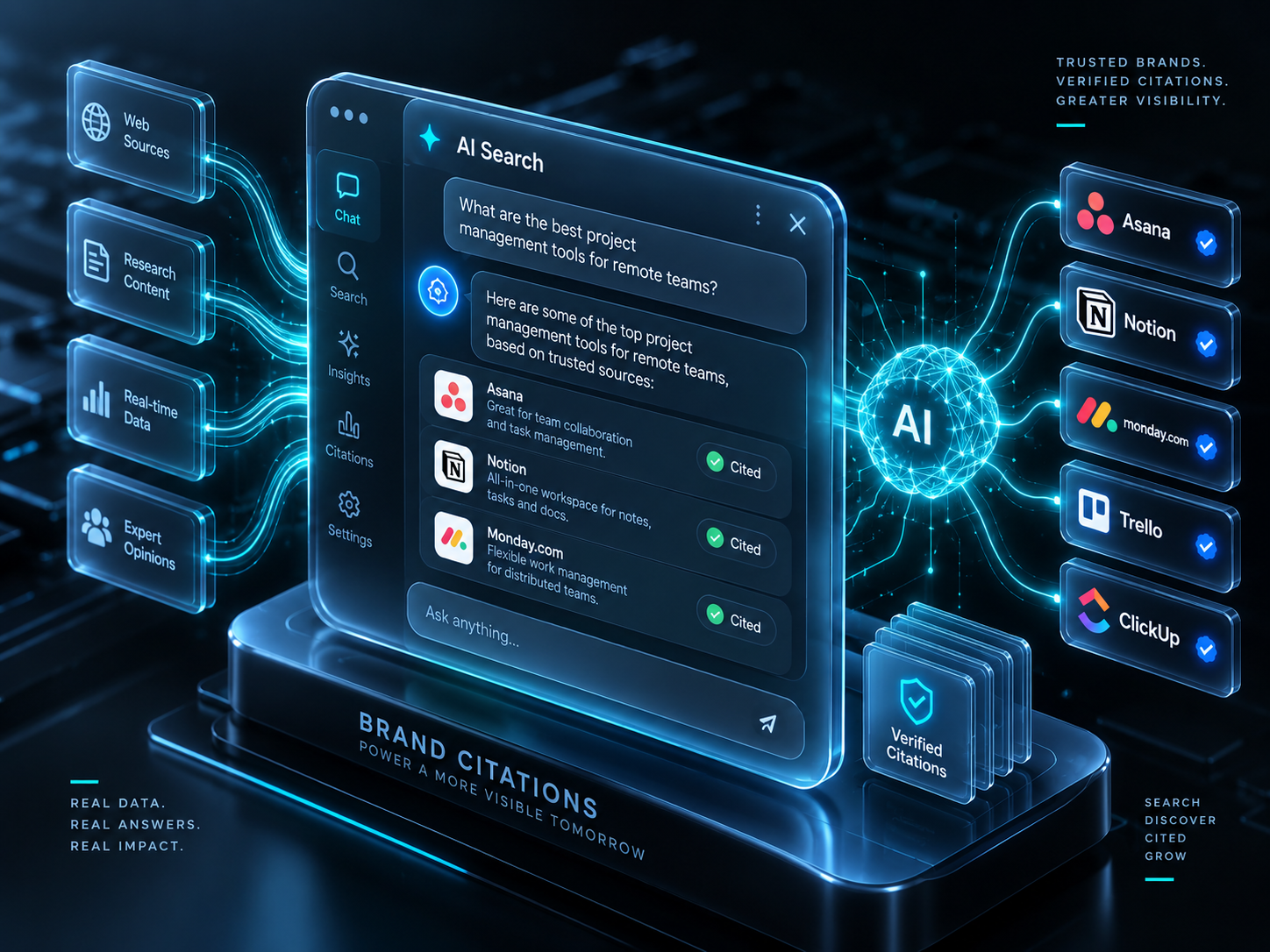
WHAT GEO IS
Generative engine optimisation (GEO), also called AI SEO, LLM SEO or answer engine optimisation, is the practice of making your business easy for AI assistants to find, understand and recommend.
A search engine returns a list of links. An AI assistant writes an answer and names a few businesses, sources or products in it. To be named, you need to be:
GEO doesn't replace SEO. Most AI assistants ground their answers in web search results, so strong SEO is the foundation. GEO adds the parts traditional SEO often misses: crawler access for AI systems, entity consistency across the web, and content written to be quoted.
WHAT WE DO
| Area | What we do |
|---|---|
| Crawler access | Check robots.txt, firewall and CDN rules so the crawlers you want can reach your pages: Googlebot (which also serves Google's AI Overviews), Bingbot (behind Microsoft Copilot), OpenAI's OAI-SearchBot, PerplexityBot and others. We help you decide separately which training crawlers, such as GPTBot, to allow. |
| Rendering | Make sure key content is in the HTML, not only added by JavaScript, because many AI crawlers don't run scripts. |
| Entity clarity | Consistent name, description, services, locations and founders across your website, Google Business Profile, LinkedIn and directories, backed by Organization and Service structured data. |
| Answer-ready content | Pages that answer real buyer questions directly: what you do, who it's for, how it works, what affects the cost, how you compare. Clear headings, short answers first, facts with sources. |
| Citations and mentions | Identify the sources assistants cite in your market (directories, review sites, comparison articles, communities) and work on being accurately represented there. |
| Measurement | Track which assistants name you, for which questions, and who they name instead, before and after the work. |
What we don't do: publish fake reviews, stuff pages with prompts or hidden text, or promise that an assistant will recommend you. Assistants change quickly, and nobody controls their answers.
MEASURED, NOT GUESSED
We built AI Visibility Check because we needed evidence, not guesswork. It runs 21 automated checks across crawler access, structured data, content clarity and trust, and asks six AI assistants (ChatGPT, Gemini, Claude, Perplexity, Grok and DeepSeek) the kinds of questions your customers type, recording which businesses get named.
Every finding shows the evidence behind it. When a check can't collect enough evidence, the report says "Unmeasured" rather than guessing.
On a GEO project we use the same approach:
The essential scan is free and takes about a minute. It's the quickest way to see where you stand.
HOW WE WORK
Start with evidence, fix the foundations, then build the signals assistants rely on.
We run AI Visibility Check for you and your competitors, review Search Console, and list the questions buyers ask assistants in your market.
We fix crawler access, rendering and structured data, and make your business details consistent across your website and main profiles.
We improve or create pages that answer buyer questions directly, and work on the third-party sources assistants cite in your sector.
We repeat the same probes on a regular schedule, report what changed, and adjust the plan.
COMMON QUESTIONS ABOUT AI CRAWLERS
Blocking AI training isn't the same as blocking AI search. OpenAI, for example, uses GPTBot for training and OAI-SearchBot for search features. You can refuse one and allow the other. Blocking everything with "AI" in its name can remove you from AI answers altogether.
Google's AI Overviews use Googlebot. The separate Google-Extended setting controls whether your content is used for Gemini models; it doesn't remove you from Google Search or AI Overviews.
llms.txt is optional. It's a proposed file that summarises your site for language models. Google has said it doesn't use it. It's cheap to add and does no harm, but it won't fix crawler access, weak content or inconsistent details. Our free llms.txt generator drafts one for you.
Firewalls and CDNs can block crawlers silently. Bot protection settings sometimes block legitimate crawlers even when robots.txt allows them. We check both.
FREQUENTLY ASKED QUESTIONS
Straight answers about generative engine optimisation and AI search.
EXPLORE FURTHER
Run the free check to see where you stand, or tell us about your market and we'll reply with practical next steps.