Why AI Visibility Matters Now
More people now ask an AI assistant instead of scrolling through search results: "who's a good accountant near me?", "which CRM suits a small team?", "best physio in Bristol?". The assistant gives a short answer and names a handful of businesses. If yours isn't one of them, you don't get a second chance on page two, because there is no page two.
AI assistants build those answers from what they can read and trust about you on the web: your own website, your Google Business Profile, directories, reviews and other sites that mention you. That is why AI visibility (sometimes called LLM visibility, or the goal of generative engine optimisation, GEO) depends on things you can check and fix:
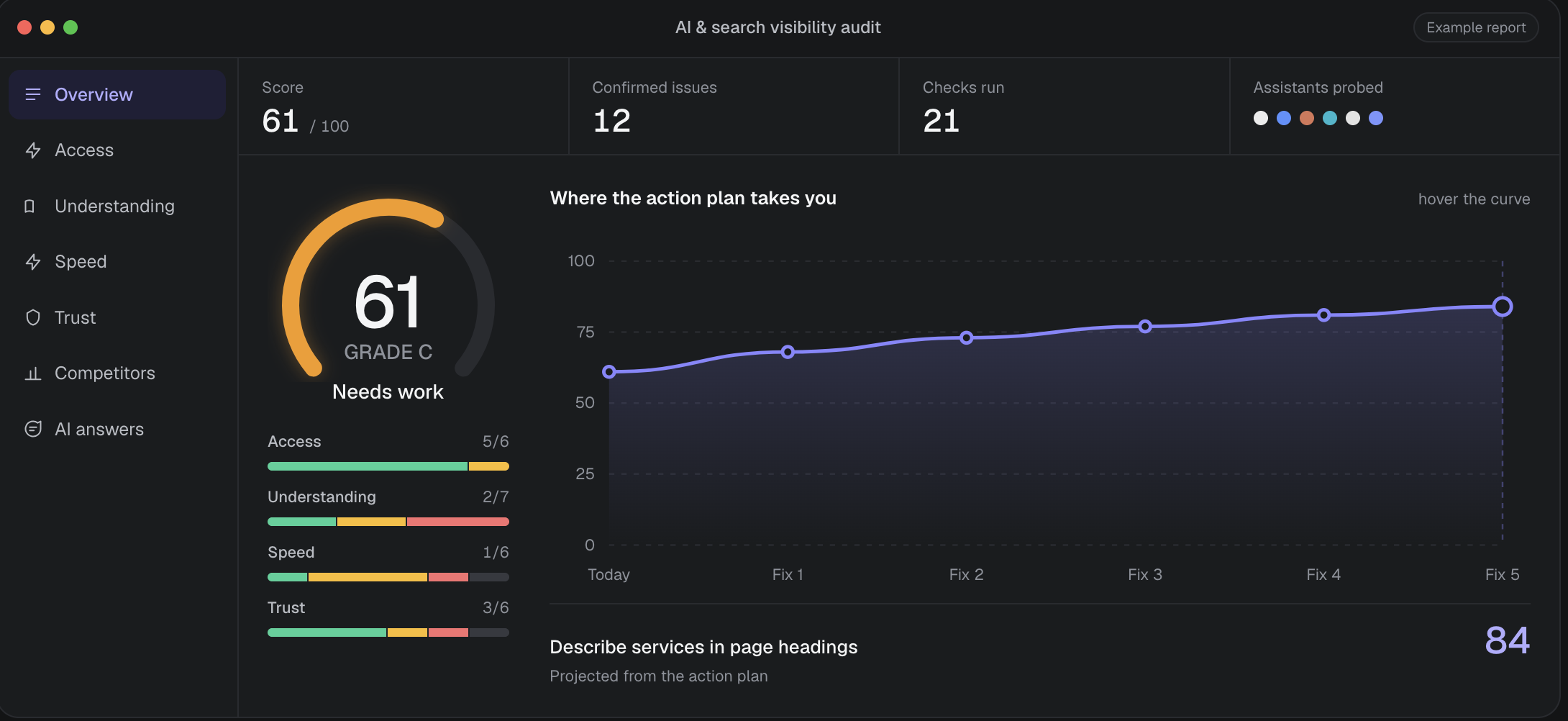
- Access. Can AI crawlers such as OAI-SearchBot, PerplexityBot and Googlebot actually reach your pages, or does your robots.txt or firewall block them?
- Understanding. Does your site say clearly, in text and structured data, who you are, what you do and where you work?
- Trust. Do other sources agree with what your site says: the same name, address and phone number, and reviews that match your services?
- Answers. Does your content answer the questions customers actually ask, in plain sentences an assistant can quote?
Who the checker is for
- Local businesses that rely on "near me" searches and recommendations.
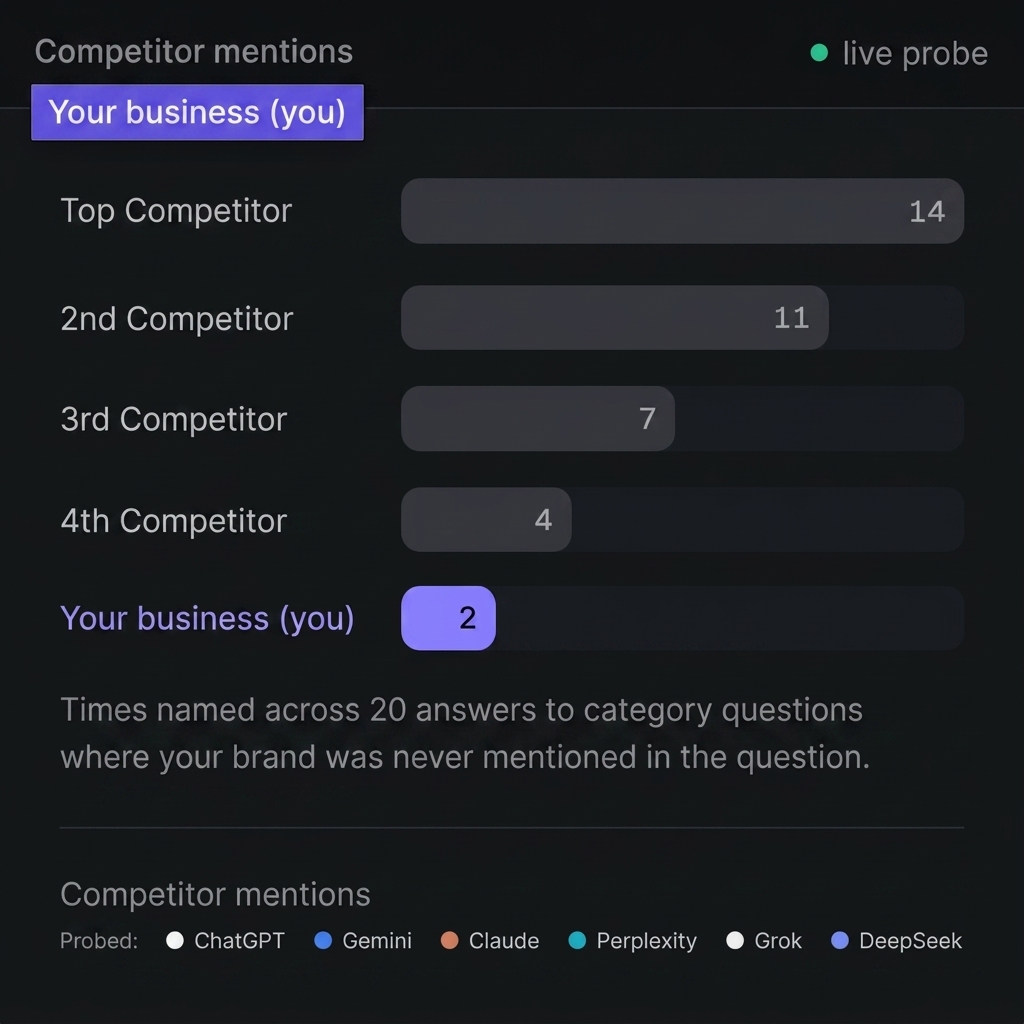
- Small and mid-sized companies that want to know whether ChatGPT or Gemini mention them or a competitor.
- Marketing teams and agencies that need an evidence-based starting point before they spend on SEO or content.
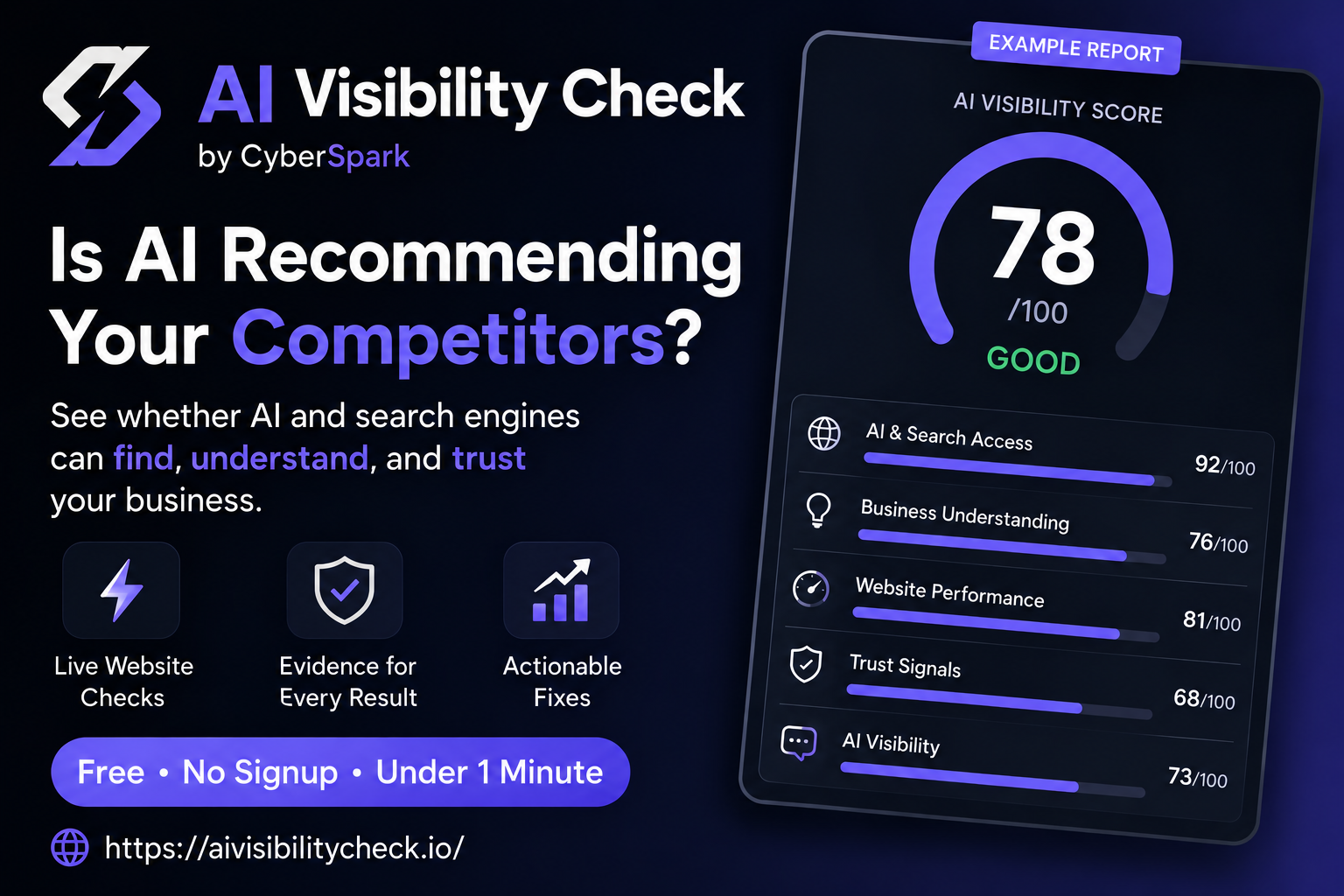
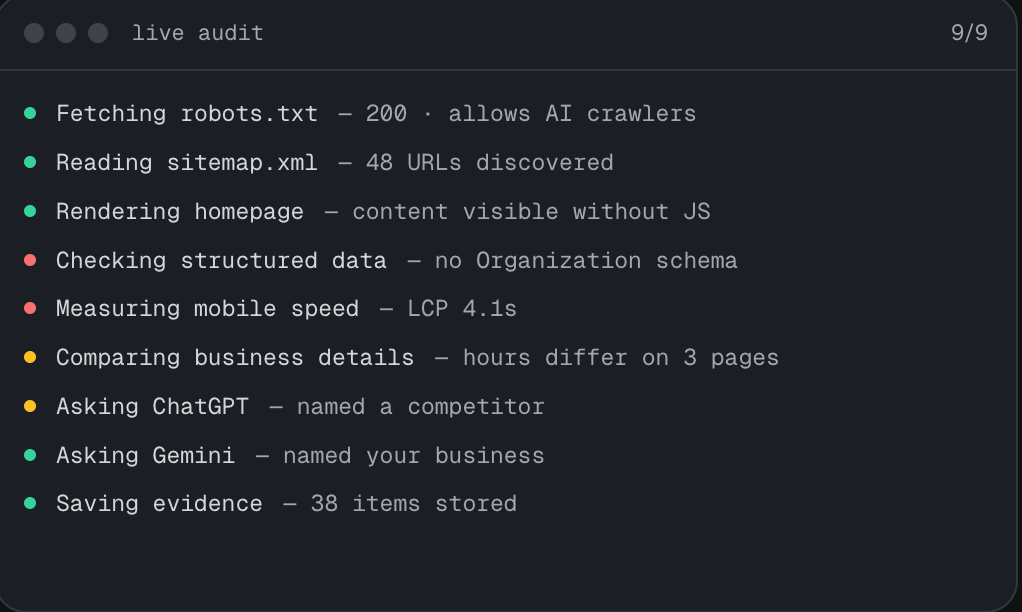
A score is only useful if you can act on it, so every finding comes with the evidence that was collected and a plain-English fix.